
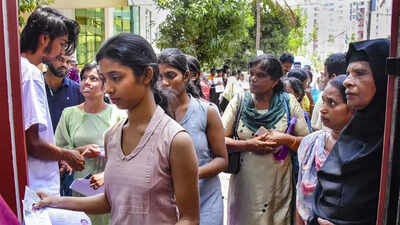
NEET UG 2026: The National Testing Agency conducted NEET UG 2026 across India, recording a nationwide attendance of 96.92 per cent. Of the 22,75,011 registered candidates, 22,05,035 appeared for the examination held in pen-and-paper mode between 2:00 PM and 5:00 PM.The examination was organised in 551 cities across India and 14 international locations, covering more than 5,432 centres. Around 22.79 lakh candidates had registered, making it one of the largest entrance examinations conducted globally.Large scale coordination ensured smooth conductThe examination involved extensive coordination across administrative and operational levels. A total of 674 city coordinators managed city-level arrangements, while over 6,000 observers were deployed to monitor examination centres independently. Centre superintendents and invigilators were present at each venue.District administrations, police forces and escort teams supported the secure movement of confidential materials. In total, more than two lakh personnel were mobilised to manage operations for the examination.Multi-layered security arrangements in placeA detailed security framework was implemented to maintain fairness and transparency. Examination materials were transported under sealed protocols using GPS-enabled vehicles with police escort. All centres were equipped with CCTV surveillance systems linked to central control rooms.Mandatory frisking using high-sensitivity metal detectors was conducted before entry. Aadhaar-based biometric authentication was used to verify candidate identity and prevent impersonation. Centralised monitoring systems were used for real-time oversight.Authorities also monitored social media platforms to prevent misinformation. More than 65 Telegram channels were blocked for circulating fake question papers and misleading content. Complaints were filed with cyber-crime authorities in such cases.Biometric exceptions allowed with verification processCandidates unable to complete biometric verification due to technical issues, fingerprint quality, connectivity problems or physical limitations were allowed to appear for the examination. Such candidates were required to submit a written undertaking and underwent manual identity verification using valid documents.Facilities provided at examination centresArrangements were made at all centres to manage the large number of candidates and prevailing summer conditions. These included power backup, proper lighting, fans, drinking water, sanitation and medical support.Candidates were allowed to carry transparent water bottles. Additional biometric machines and trained staff were deployed to speed up verification. Diabetic candidates were permitted to carry sugar tablets and fruits such as bananas, apples and oranges, along with a transparent bottle.Strict entry schedule and candidate guidelines followedCandidates were required to report between 11:00 AM and 1:30 PM, with entry gates closing at 1:30 PM. No entry was allowed after the deadline.Candidates were instructed to carry a printed admit card, a valid photo ID and passport-size photographs. Items such as mobile phones, smart watches, calculators, wallets and metallic accessories were prohibited inside examination halls. Candidates were advised to follow official guidelines and rely only on authorised communication channels.